
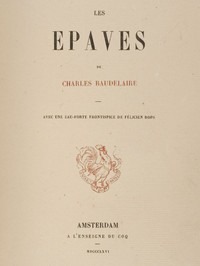
Les épaves de Charles Baudelaire by Charles Baudelaire
So, what is this infamous book? ‘Les Épaves’ (which means ‘The Wrecks’ or ‘Scraps’) isn’t a novel with a plot. It’s a slim collection of poems that Baudelaire published in 1866, gathering pieces deemed too scandalous for his earlier masterpiece, The Flowers of Evil. Think of it as the director’s cut, the stuff that got left on the cutting room floor because it was too much for 19th-century Paris.
The Story
There’s no traditional story here. Instead, you walk through a gallery of dark moods and forbidden thoughts. The poems are snapshots: a man obsessed with a woman’s hair, a meditation on a rotting carcass, a blasphemous prayer, and portraits of outcasts and fallen women. The ‘story’ is the journey of Baudelaire’s own consciousness—his revolt against boring morality, his fascination with the ugly and the sensual, and his deep sense of being a stranger in a modernizing world.
Why You Should Read It
You should read it because it’s electric. Even in translation, the language crackles. Baudelaire finds music in misery and elegance in rebellion. He makes you see the world differently—where a passing glance can feel like a crime, and a city street can feel like a haunted landscape. It’s not always comfortable, but it’s never boring. He’s the original poet of the modern, dislocated soul.
Final Verdict
This is perfect for anyone who loves poetry that punches you in the gut, not just tickles your ear. It’s for goths, romantics, rebels, and anyone curious about why art was ever considered dangerous. If you like Edgar Allan Poe’s vibe or the raw honesty of modern confessional poetry, Baudelaire is your gloomy, brilliant French grandfather. Just be ready—it might leave a stain on your imagination.
This text is dedicated to the public domain. Feel free to use it for personal or commercial purposes.
Kimberly Harris
9 months agoThe clarity of the concluding remarks is very professional.
William White
2 months agoUnlike many other resources I've purchased before, the author’s unique perspective adds a fresh layer to the discussion. I'm genuinely impressed by the quality of this digital edition.
Matthew Wilson
6 months agoThe analytical framework presented is both innovative and robust.
Liam Wilson
2 years agoSurprisingly enough, the plot twists are genuinely surprising. I couldn't put it down.




Emily Taylor
6 months agoHaving explored several resources on this, I find that the quality of the diagrams and illustrations (if applicable) is top-notch. The insights gained here are worth every minute of reading.