
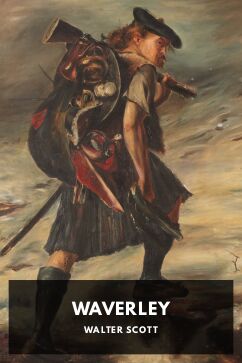
Waverley - Walter Scott
If you think historical fiction is all dusty dates and dry facts, Walter Scott's Waverley is here to prove you wrong. Published anonymously in 1814, this book basically invented the genre as we know it, and reading it feels like discovering the source of a river. It's packed with adventure, romance, and a clash of cultures that still feels relevant today.
The Story
We follow Edward Waverley, a daydreaming young Englishman with a head full of romantic poetry. To shake him out of his daze, his family gets him a commission in the army, and he's sent north to Scotland. What starts as a mild curiosity about the local clans turns into a life-altering immersion. He's captivated by their traditions, their raw landscape, and especially by Flora Mac-Ivor, a proud Highland woman dedicated to the Jacobite cause of restoring the Stuart monarchy. As the 1745 rebellion led by Bonnie Prince Charlie ignites, Edward is pulled into the conflict. He has to make an impossible choice: remain loyal to the king he swore an oath to, or join the passionate, doomed fight of the people who have shown him a new way to live.
Why You Should Read It
Scott doesn't just tell you about history; he makes you live it. You feel the chill of the Highland mist and the heat of a loyalist's anger. Edward is a fantastic guide because he's just as confused and dazzled by this new world as we are. The book is really about identity—how where we're from shapes us, and what happens when we're exposed to something completely different. It's also surprisingly funny in parts, with characters who feel real and full of life, not like historical mannequins. You come away understanding why these people fought, on both sides, which is the mark of great storytelling.
Final Verdict
Waverley is perfect for anyone who loves a great adventure with heart. If you enjoy Outlander but want the classic that inspired it all, start here. It's for readers who like their history with a pulse—full of messy decisions, complex loyalties, and characters you won't forget. It's not a quick, breezy read; it's a rich, satisfying one. Think of it as a long, scenic hike through a pivotal moment in history, led by the writer who first mapped the trail. Give it a few chapters to settle into its rhythm, and you'll be rewarded with a story that started it all.
There are no legal restrictions on this material. Thank you for supporting open literature.
Elijah Smith
6 months agoI came across this while browsing and the clarity of the writing makes this accessible. Worth every second.
Joseph King
1 year agoHonestly, the author's voice is distinct and makes complex topics easy to digest. Exceeded all my expectations.
Michelle Perez
8 months agoI stumbled upon this title and the character development leaves a lasting impact. A true masterpiece.
Linda Wright
1 year agoAfter hearing about this author multiple times, it manages to explain difficult concepts in plain English. This story will stay with me.


Logan Lopez
1 year agoSimply put, the character development leaves a lasting impact. Worth every second.