About 148 minutes
Journal of a Trip to California by the Overland Route Across the Plains in 1850-51 — A Closer Reading
Geography
33,973 recorded words. 0 minutes difference from this book's estimate.
View Gutenberg source #31780
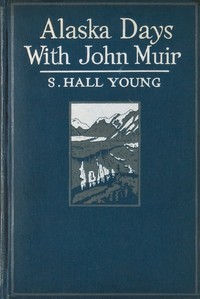
The catalog record for Alaska Days with John Muir — Reading Companion provides practical reading context through 33,996 words, 2 hr 28 min estimated reading time, and 5 detected text sections.
The text analysis averages about 22.7 words per sentence, while the detected sections provide another way to judge how the source is divided.
Project Gutenberg metadata also associates the work with “Alaska -- Description and travel,” connecting these edition facts with the source record’s subject description.
Explore this collection
These alternatives are selected using recorded categories and estimated reading time.
About 148 minutes
Geography
33,973 recorded words. 0 minutes difference from this book's estimate.
View Gutenberg source #31780About 143 minutes
Geography
32,721 recorded words. 5 minutes difference from this book's estimate.
View Gutenberg source #5814About 129 minutes
Geography
29,560 recorded words. 19 minutes difference from this book's estimate.
View Gutenberg source #14213Search stored excerpts and compare books → Choose by your preferences →
Choices use stored catalog measurements. Estimates vary with reading speed. A shared category is a catalog label, not a claim that two books have the same argument or literary quality.
Search reads excerpt text stored with this catalog and links to its associated Gutenberg record. The connection is stored in the site database; this tool does not recheck that every excerpt is word-for-word identical to that external record. Excerpt search does not cover every chapter and does not verify historical publication dates.
Catalog snapshot checked: 2026-09-25. Coverage: 95 public books, 95 available source excerpts.
Read the complete public-domain text at its original source.
Read on Project GutenbergSamuel Hall Young, a young missionary fresh from seminary, met John Muir in July 1879 at Fort Wrangell, Alaska. Their partnership—part spiritual, part scientific—produced this memoir, which is as much about Young's own education in the wilds as it is about Muir's genius. The book's catalog subjects list Alaska travel, Muir's journeys, and natural history, but the excerpts show a text equally concerned with human tragedy, indigenous relations, and the emotional weight of place. Young writes not as a naturalist but as a witness, and his account of the chief Tow-a-att's murder, for instance, carries a moral charge absent from Muir's own writings.
The catalog classifies this work under 'Natural history — Alaska,' yet Young's descriptions of landscape are never purely scientific. When he describes the Davidson Glacier, he writes of its 'great snow-white fan' that 'drew our gaze and excited our admiration for two days'—a response more aesthetic than analytical. His opening poem, 'The Mountain,' uses religious diction ('Deep calm from God enfolds the land') to frame the scenery as a divine artifact. This is not Muir's detached observation; it is a missionary's attempt to reconcile the sublime with the sacred. Young's Alaska is a place where 'Power, beauty, peace, in one array' leads him to thank God, not to measure ice flow.
Young includes episodes that Muir's own narratives omit. The murder of Chief Tow-a-att—'the noblest Roman of them all'—is described in harrowing detail: the chief 'fell dead at my feet with a bullet through his forehead' during a conflict fueled by liquor trade. Young explicitly blames 'the white man, who had taught the Indians the art of making rum, and the white man's government, which had afforded no safeguard.' This moral indictment is not a travelogue's footnote but a central, troubling counterpoint to the book's adventure. The catalog's subject 'Alaska — Description and travel' does not capture this critical dimension.
Young devotes considerable space to the dog Stickeen, whom he initially brought along against Muir's protests. He asserts that Muir's later story 'Stickeen' ranks with classics like 'Rab and His Friends,' and he corrects Muir's description: 'I think that he was the handsomest dog I have ever known.' This section reveals Young's proprietary pride—the dog was his wedding gift from his bride—and his desire to set the record straight. The excerpts show a man who, while deferring to Muir's fame, insists on his own role in the story. The catalog does not index Stickeen, yet the dog is a major character in the memoir.
Readers should approach this book as a dual portrait: of Alaska's glaciers and of a missionary's formation. Young's voice is earnest, sometimes defensive, and deeply personal. The catalog subjects hint at travel and natural history, but the text itself is a memoir of friendship, loss, and the struggle to interpret a vast, indifferent landscape through a Christian lens. Those familiar with Muir's own writing will find a complementary—and occasionally conflicting—perspective.
I finished Alaska Days feeling the strange weight of knowing a place can shape a soul—Young’s faith and Muir’s wonder, side by side. It made me think of another traveler, centuries older, jotting down small observations on a long road. There’s a quiet comfort in that: The journal of Montaigne's travels in Italy by way of Switzerland and Germany in 1580 and 1581, Volume 1 (of 3) — Reading Notes, where the journey itself becomes the honest company.
Your answers remain private and are stored only in this browser.