About 118 minutes
The Mountains of Oregon — Reading Notes
Geography
27,036 recorded words. 6 minutes difference from this book's estimate.
View Gutenberg source #36746
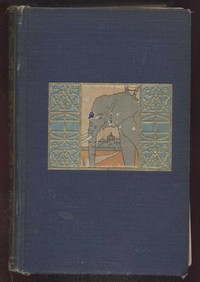
The source record for Following the Equator: A Journey Around the World. Part 2 — Edition Insights measures this digital text at 25,653 words, 1 hr 52 min estimated reading time, and 4 detected text sections.
The text analysis averages about 20.9 words per sentence, while the detected sections provide another way to judge how the source is divided.
Project Gutenberg metadata also associates the work with “Voyages around the world,” connecting these edition facts with the source record’s subject description.
Explore this collection
These alternatives are selected using recorded categories and estimated reading time.
About 118 minutes
Geography
27,036 recorded words. 6 minutes difference from this book's estimate.
View Gutenberg source #36746About 119 minutes
Geography
27,227 recorded words. 7 minutes difference from this book's estimate.
View Gutenberg source #8482About 122 minutes
Geography
27,950 recorded words. 10 minutes difference from this book's estimate.
View Gutenberg source #5808Search stored excerpts and compare books → Choose by your preferences →
Choices use stored catalog measurements. Estimates vary with reading speed. A shared category is a catalog label, not a claim that two books have the same argument or literary quality.
Search reads excerpt text stored with this catalog and links to its associated Gutenberg record. The connection is stored in the site database; this tool does not recheck that every excerpt is word-for-word identical to that external record. Excerpt search does not cover every chapter and does not verify historical publication dates.
Catalog snapshot checked: 2026-09-25. Coverage: 95 public books, 95 available source excerpts.
Read the complete public-domain text at its original source.
Read on Project GutenbergMark Twain's account of his journey through Australia opens with a characteristic blend of precise observation and wry humor. In the early pages, he describes the approach to Sydney Harbor, noting porpoises at night and the loss of the Duncan Dunbar. He then turns to the city itself, remarking on its springtime climate and the size of Australia, before launching into a dust-storm and hot wind. The tone is that of a seasoned traveler who is both curious and skeptical, ready to puncture pretensions and note absurdities.
The excerpts reveal a writer attentive to the peculiarities of place—the "melancholy gum trees" with flaking bark, the "duchesses" serving as waitresses, and the ubiquitous advertisements for "sheep-dip." Twain's voice is conversational, often digressive, and he frequently interrupts his narrative with anecdotes or reflections that seem only tangentially related to the journey itself.
Twain's observations are concrete and often surprising. He notes that the waitresses in Australian railway restaurants dress like duchesses, "attracting attention at any royal levee in Europe." He describes the gum trees as "erysipelas convalescents, shedding their dead skins." Such metaphors are not merely decorative; they reveal a mind that constantly compares the new world to the old, finding both similarities and absurdities.
He also comments on the coffee served on government railroads, which he finds "too passive" until improved by "sheep-dip," a tar-like substance used on sheep. This kind of deadpan exaggeration is typical of Twain's style, and it invites the reader to share in his amused skepticism. The details are not random; they build a picture of a society that is both familiar and strange, where English customs are transplanted but transformed.
One of the most extended digressions in this part concerns the Tichborne Claimant, who kept a butcher shop in Wagga-Wagga. Twain recounts the story of Arthur Orton, who claimed to be the lost heir Sir Roger Tichborne, and the ensuing legal and public sensation. He calls it "the most intricate and fascinating and marvelous real-life romance that has ever been played upon the world's stage."
This anecdote serves multiple purposes: it provides local color, it allows Twain to reflect on the nature of truth and fiction, and it demonstrates his fascination with imposture and identity. The digression is typical of his method—he follows a thread that interests him, even if it leads away from the main narrative. The reader is advised to embrace these detours, as they often contain the most memorable material.
Twain's descriptions of the Australian landscape are marked by a sense of absence. He notes that he saw no kangaroos, no emus, no ornithorhynchus, and no Aboriginal people—only birds. He remarks wryly that in Australian museums one finds all curiosities except the "chiefest interest to the stranger," the Aboriginal people themselves. This observation is both a factual report and a subtle critique of colonial display.
The landscape itself is dominated by gum trees, which Twain finds unsociable and melancholy. He describes the plains as "thin—not thick—forests" and the tiny cabins built of wood or corrugated iron. The children he sees look as if they had been "imported from the banks of the Mississippi without breaking bulk." This comparison to his native America is a recurring motif, grounding the foreign in the familiar.
Twain's humor is not merely entertainment; it is a tool for inquiry. When he encounters the claim that rabbit-plague created a mountain range, he notes dryly that "it is too large an order." His skepticism extends to official information and local boasts. He warns that "the facts which such people give to travelers are usually erroneous, and often intemperately so."
This wariness is part of a broader stance: Twain presents himself as a reasonable man in a world of exaggeration and self-interest. His jokes about sheep-dip and coffee, or about the duchesses in waiting, are ways of testing the reliability of what he is told. The reader is invited to adopt a similar attitude—to enjoy the stories but to hold them lightly, as Twain himself does.
As you read this part of Following the Equator, pay attention to the way Twain shifts between narrative, description, and digression. The book is not a straightforward travelogue but a series of encounters and reflections, held together by the author's distinctive voice. The excerpts suggest that Twain is as interested in the stories people tell about a place as in the place itself. Let his skepticism guide you, but also let his curiosity lead you into unexpected corners.
I finished Following the Equator feeling the ache of distance—how Twain’s humor keeps people at an arm’s length even while he walks among them. It reminded me of that particular loneliness in Travels in Nubia — Edition Insights, where the landscape itself seems to absorb every traveler’s footsteps. Both books share that quiet, unresolved longing for home.
Use these questions to collect your thoughts before moving on.