About 119 minutes
Life on the Mississippi, Part 12. — Reading Notes
Geography
27,227 recorded words. 1 minutes difference from this book's estimate.
View Gutenberg source #8482
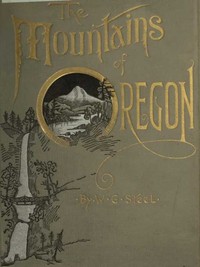
This digital edition of The Mountains of Oregon — Reading Notes is described by source-level measurements including 27,036 words, 1 hr 58 min estimated reading time, and 5 detected text sections.
The text analysis averages about 13.0 words per sentence, while the detected sections provide another way to judge how the source is divided.
Project Gutenberg metadata also associates the work with “Oregon -- Description and travel,” connecting these edition facts with the source record’s subject description.
Explore this collection
These alternatives are selected using recorded categories and estimated reading time.
About 119 minutes
Geography
27,227 recorded words. 1 minutes difference from this book's estimate.
View Gutenberg source #8482About 122 minutes
Geography
27,950 recorded words. 4 minutes difference from this book's estimate.
View Gutenberg source #5808About 123 minutes
Geography
28,195 recorded words. 5 minutes difference from this book's estimate.
View Gutenberg source #5810Search stored excerpts and compare books → Choose by your preferences →
Choices use stored catalog measurements. Estimates vary with reading speed. A shared category is a catalog label, not a claim that two books have the same argument or literary quality.
Search reads excerpt text stored with this catalog and links to its associated Gutenberg record. The connection is stored in the site database; this tool does not recheck that every excerpt is word-for-word identical to that external record. Excerpt search does not cover every chapter and does not verify historical publication dates.
Catalog snapshot checked: 2026-09-25. Coverage: 95 public books, 95 available source excerpts.
Read the complete public-domain text at its original source.
Read on Project GutenbergW. G. Steel opens his volume with a modest preface, explaining that the work grew from requests for descriptions of Crater Lake and Mount Hood, originally intended as a pamphlet. The resulting book is a hybrid: part travelogue, part organizational record for the Oregon Alpine Club, and part linguistic inquiry into Native place names. Steel’s prose is direct, often journalistic, yet he lingers on the practical challenges of mountain exploration—such as the failed 1885 attempt to illuminate Mount Hood with red fire, thwarted when an avalanche broke the acid bottles.
Steel recounts two attempts to illuminate Mount Hood with red fire. The first, in 1885, relied on clockwork and acids, but an avalanche at four in the afternoon set the whole thing ablaze prematurely. The second, in 1887, was managed by Portland’s Celebration Committee. Steel’s telling is matter-of-fact, yet the episode reveals a desire to transform the mountain into a civic monument. He calls Mount Hood “a monument of beauty, and the pride of Oregon,” a phrase that echoes through the book as he balances awe with boosterism.
In a remarkable passage, Steel describes an 1882 interview with twenty elderly Indigenous men from the White River, Puyallup, and Squally bands. He sought the original name for Mount Rainier. The men, who disdained Chinook Jargon, communicated through “syllabic utterances” and pantomime. Steel insists that no word as euphonious as “Tacoma” could have come from their “half-uttered nasal grunts.” His account is ethnographically detailed but culturally dismissive, framing Indigenous language as “poverty-stricken” and reliant on gesture. The episode is a striking example of late-nineteenth-century attitudes toward Native speech.
The volume includes the constitution and department reports of the Oregon Alpine Club, founded by Steel. These sections list officers, outline rules for exploration and game protection, and include a bibliography of Oregon. The club’s Photographic Department suggests an early effort to document peaks visually. Steel’s inclusion of these records blurs the line between travel narrative and institutional archive, offering a snapshot of how amateur naturalists organized to study and promote the region’s mountains.
Steel’s description of Crater Lake, though not fully excerpted here, is positioned as a core reason for the book’s existence. Based on the preface, he wrote it in response to repeated requests. The lake’s formation, color, and surrounding cliffs likely receive the same direct, observational treatment he applies to Hood and Rainier. Steel’s method is to compile newspaper-like accounts into permanent form, as he states, aiming to “amuse, entertain or instruct” rather than to produce a systematic scientific treatise.
Steel’s book is best approached as a period document of Oregon’s mountain culture in 1890. Readers interested in the history of exploration, early alpine clubs, or the politics of place names will find raw material here. The author’s voice is that of a booster, a collector, and a sometimes uneasy ethnographer. The excerpts suggest a work that is less a unified narrative than a portfolio of interests—a reflection of one man’s effort to fix fleeting knowledge in print.
Steel’s Oregon feels so far off now, those old names and alpine clubs. When I set the book down, my mind wandered north to another wilderness, and I found myself reaching for Alaska Days with John Muir — Reading Companion. Same longing for places that barely exist anymore, just a quieter hand on the page.
Use these questions to collect your thoughts before moving on.