
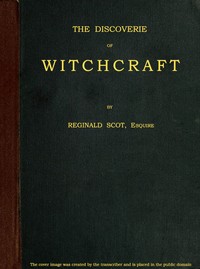
The Discoverie of Witchcraft by Reginald Scot
Let's set the scene: England, late 1500s. Witch trials are a grim reality. Fear is everywhere. Into this steps Reginald Scot, a country gentleman who looks at the chaos and says, 'Hold on.'
The Story
This isn't a story with a plot in the usual sense. Think of it as a massive, detailed argument. Scot spends over 500 pages doing two things. First, he systematically attacks the belief in witchcraft. He argues that the Bible doesn't support it, that the confessions are gained through torture, and that natural causes explain the 'miracles.' Second—and this is the wild part—he reveals how magical tricks are done. He explains how con artists fake levitation, make objects seem to vanish, and create 'mysterious' apparitions. He was trying to show his readers: 'See? It's all a clever show. Stop burning people.'
Why You Should Read It
You should read it for the sheer audacity. Scot was risking his reputation and possibly his safety. His voice is passionate, sometimes sarcastic, and deeply compassionate for the victims. Reading his careful debunking of 'spectral evidence' or his exposés of street magic is thrilling. You're witnessing the birth of a skeptical, scientific mindset. It’s also surprisingly modern in its call for evidence and its attack on cruel and irrational laws.
Final Verdict
This is a book for the curious. It's perfect for history buffs who want to go beyond kings and battles to the thoughts of everyday people. It's great for anyone interested in the history of magic, science, or human rights. Be warned: the 16th-century prose takes some getting used to. But push through. You'll be rewarded with a powerful story of one man's reason shouting into a hurricane of fear.
This title is part of the public domain archive. It is now common property for all to enjoy.
Thomas Miller
1 year agoThe index links actually work, which is rare!
David Nguyen
1 year agoCompatible with my e-reader, thanks.
Jessica Clark
1 year agoFrom the very first page, it provides a comprehensive overview perfect for everyone. A valuable addition to my collection.
David Lopez
11 months agoText is crisp, making it easy to focus.






Margaret Lopez
2 years agoThe clarity of the introduction set high expectations, and the author manages to bridge the gap between theory and practice effectively. A solid investment for anyone's personal development.