About 173 minutes
The Pilgrims' Way from Winchester to Canterbury — Reading Companion
Geography
39,692 recorded words. 4 minutes difference from this book's estimate.
View Gutenberg source #44684
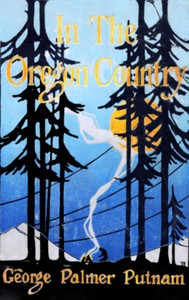
The catalog record for In the Oregon Country Out-Doors in Oregon, Washington, and California Together with some Legendary Lore, and Glimpses of the Modern West in the Making — Text and Context provides practical reading context through 40,493 words, 2 hr 57 min estimated reading time, and 6 detected text sections.
The text analysis averages about 23.1 words per sentence, while the detected sections provide another way to judge how the source is divided.
Project Gutenberg metadata also associates the work with “Rainier, Mount (Wash.),” connecting these edition facts with the source record’s subject description.
Explore this collection
These alternatives are selected using recorded categories and estimated reading time.
About 173 minutes
Geography
39,692 recorded words. 4 minutes difference from this book's estimate.
View Gutenberg source #44684About 172 minutes
Geography
39,485 recorded words. 5 minutes difference from this book's estimate.
View Gutenberg source #70838About 189 minutes
Geography
43,309 recorded words. 12 minutes difference from this book's estimate.
View Gutenberg source #53155Search stored excerpts and compare books → Choose by your preferences →
Choices use stored catalog measurements. Estimates vary with reading speed. A shared category is a catalog label, not a claim that two books have the same argument or literary quality.
Search reads excerpt text stored with this catalog and links to its associated Gutenberg record. The connection is stored in the site database; this tool does not recheck that every excerpt is word-for-word identical to that external record. Excerpt search does not cover every chapter and does not verify historical publication dates.
Catalog snapshot checked: 2026-09-25. Coverage: 95 public books, 95 available source excerpts.
Read the complete public-domain text at its original source.
Read on Project GutenbergGeorge Palmer Putnam’s 1915 travelogue opens with a pointed anecdote about a Forest Service ranger who insists a pasture is government property, only to be challenged by Putnam’s partner: “Who is the Government?” The exchange reveals a central tension in the book—the collision between individual freedom and federal stewardship of public lands. Putnam, writing as an enthusiast of the out-of-doors, navigates this conflict with a mix of humor and earnest advocacy, positioning himself as a camper grateful for well-maintained trails and fire prevention, even as he acknowledges the resentment of settlers and timber interests. The book’s subtitle promises “Legendary Lore” and “Glimpses of the Modern West in the Making,” and the excerpts deliver precisely that: a firsthand account of a region in transition, where the old school of “the public be damned” meets a new ethos of conservation.
Putnam’s preface and the ranger anecdote establish a recurring pattern: the author delights in testing bureaucratic boundaries. When the ranger declares the pasture “Property of the Forest Service,” Putnam’s partner presses the logic until the ranger stammers. The punchline—that the government belongs to the people, so the pasture is “ours”—is undercut by Putnam’s own admission that “the principle doesn’t work out in practice.” This self-aware framing is typical of the book’s voice: enthusiastic but not naive. Putnam distinguishes between the “old school” ranger who regarded reserves as “his own sacred property” and the modern service that treats forests as “great playgrounds.” The passage is a microcosm of the book’s larger argument: that conservation, however imperfect, serves the recreational user better than the extractive industries.
Putnam explicitly addresses multiple audiences: the settler seeking to eliminate a homestead, the timber speculator, the vote-seeker who damns conservation as “politically fashionable,” and the “foolish camper” who dreads a treeless earth. His sympathy lies with the last. He notes that Oregon’s national forests encompass “more than sixteen million acres,” and he praises the Forest Service for accurate maps, well-blazed trails, and fire fighting. Yet he does not ignore the economic conflict: conservation is “a fence with only one side” in a West where people consider natural wealth their heritage to turn into dollars. The prose is concrete—logging-roads, band-saws, homestead elimination—and avoids abstract praise. Putnam’s stance is that of a user, not a policymaker, which gives his observations a grounded, experiential quality.
The excerpts reveal a distinctive authorial voice: colloquial, anecdotal, and occasionally wry. Putnam uses dialogue to dramatize ideological clashes, as in the ranger exchange. His sentences vary from clipped observations (“But pride precedeth falls”) to longer, catalog-like lists of grievances. The book’s structure—mixing travel narrative with “legendary lore”—is evident in the subtitle’s promise of “glimpses of the modern West in the making.” The preface, written in 1915, situates the work at a moment of transformation: the Panama Canal is about to redirect commerce, and California’s expositions are drawing global attention. Putnam’s Oregon is not a static wilderness but a contested landscape where the meaning of “public” land is being negotiated. The excerpts offer no complete plot, but they consistently return to this tension between use and preservation.
Readers should approach In the Oregon Country as a period piece that captures a specific voice—that of an educated, outdoorsy advocate who is neither a settler nor a bureaucrat. Putnam’s enthusiasm is genuine, but his observations are tempered by an awareness of conflicting interests. The book rewards attention to its small set pieces, like the ranger debate, where larger questions of ownership and access are played out in miniature. For those interested in the early conservation movement or Pacific Northwest travel writing, this text offers a firsthand, opinionated snapshot of a region on the cusp of change.
This book reminded me of sitting by the stove as a child, listening to my grandfather describe the Cascades before roads crossed them. He spoke of forests the way Putnam does—living things, not scenery. Years later, I found that same hushed attentiveness in An American Girl in Munich: Impressions of a Music Student — Reading Companion, where another young outsider turns unfamiliar ground into intimate, unhurried reflection.
Build a private reading journal entry for this title.