About 214 minutes
My African Journey — Key Ideas to Explore
Geography
49,129 recorded words. 5 minutes difference from this book's estimate.
View Gutenberg source #43035
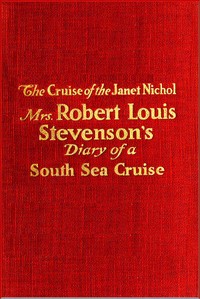
This digital edition of The Cruise of the "Janet Nichol" Among the South Sea Islands: A Diary — Reading Notes is described by source-level measurements including 50,262 words, 3 hr 39 min estimated reading time, and 6 detected text sections.
The text analysis averages about 21.5 words per sentence, while the detected sections provide another way to judge how the source is divided.
Project Gutenberg metadata also associates the work with “Oceania -- Description and travel,” connecting these edition facts with the source record’s subject description.
Explore this collection
These alternatives are selected using recorded categories and estimated reading time.
About 214 minutes
Geography
49,129 recorded words. 5 minutes difference from this book's estimate.
View Gutenberg source #43035About 211 minutes
Geography
48,361 recorded words. 8 minutes difference from this book's estimate.
View Gutenberg source #46102About 231 minutes
Geography
52,943 recorded words. 12 minutes difference from this book's estimate.
View Gutenberg source #4981Search stored excerpts and compare books → Choose by your preferences →
Choices use stored catalog measurements. Estimates vary with reading speed. A shared category is a catalog label, not a claim that two books have the same argument or literary quality.
Search reads excerpt text stored with this catalog and links to its associated Gutenberg record. The connection is stored in the site database; this tool does not recheck that every excerpt is word-for-word identical to that external record. Excerpt search does not cover every chapter and does not verify historical publication dates.
Catalog snapshot checked: 2026-09-25. Coverage: 95 public books, 95 available source excerpts.
Read the complete public-domain text at its original source.
Read on Project GutenbergFanny Van de Grift Stevenson’s diary of the 1890 cruise of the Janet Nichol was never intended for publication. In her preface she explains that the entries were originally “a collection of hints to help my husband’s memory,” and that she has “pruned rather severely” to remove passages later rewritten by Robert Louis Stevenson. The result is a text that feels both intimate and deliberately shaped—a record of island visits, shipboard life, and cross-cultural encounters, written under conditions she describes as “adverse”: on damp canoe bottoms, burning sand, or in copra sheds amid pandemonium.
The preface establishes the diary’s peculiar origins. Stevenson notes that she wrote “sometimes on the damp, upturned bottom of a canoe or whaleboat, sometimes when lying face down on the burning sands of the tropic beach, often in copra sheds in the midst of a pandemonium of noise and confusion.” This physical context matters: the text is not a polished travelogue but a hurried, sensory record. She also reveals that she has deleted incidents that her husband later used, as well as “things pertaining to the private affairs of other persons.” The reader is thus encountering a curated document, one that preserves certain details—like the near-catalogue of objects in Suwarrow—because Stevenson hoped they might serve a future romance. The preface is a warning and an invitation: what remains is what she chose not to let go.
One of the most vivid excerpts describes an encounter with women on an unnamed island. Stevenson is surrounded, examined, and measured. The women “turned up my sleeves to the shoulders,” compared hands and feet, and called her “pickaninny hands and feet.” One woman “kissed my feet (the island kiss) and sniffed softly up and down my arms.” The passage is striking for its reciprocal gaze: Stevenson notes that her own white arm looked “cold, ugly” beside their brown skin, while the women admired it. The scene escalates when the women try to remove her clothes, and Stevenson begins to cry, at which point the men disappear. The episode ends with a young girl climbing aboard to exchange a ring for a blue-bead necklace. The diary here captures a moment of physical curiosity, power, and negotiation, with Stevenson both subject and object.
Another excerpt records an evening of magic tricks aboard the ship. Mr. Henderson performs conjuring for islanders watching through the port-holes: making money disappear, tearing paper that vanishes, catching a silver dollar from the air. The audience’s reaction is immediate: “Tiaporo! (the devil!)” cries one man. The diary also alludes to a “Devil Box,” which Stevenson says her husband described fully in his own diary, so she only notes further references. The conjuring scene and the Devil Box motif suggest a running interest in how islanders interpreted European objects and actions—and how the Stevensons themselves navigated that interpretation. The diary does not explain the box, but the fragments hint at a larger story about belief, trade, and performance.
Stevenson’s preface includes a sharp rebuttal to other accounts of her husband’s life. She writes that “all the books ‘With Stevenson’ here, and ‘With Stevenson’ there, are manufactured out of ‘such stuff as dreams are made on,’ and false in almost every particular.” She corrects one specific error: the flag for King Tembinoka was designed by her on the schooner Equator and made by a Sydney firm, not on the beach at Apemama as others claimed. This defensive note reveals the diary as a corrective document, one that stakes a claim to firsthand authority. The reader is reminded that this is not a neutral record but a response to misrepresentation, written by someone who was present and who insists on the difference between memory and invention.
Reading the diary as a first-time visitor to the text, it helps to keep the preface’s framing in mind: these are notes, not a finished narrative. The gaps—the deleted passages, the unexplained Devil Box, the incidents that appear only in fragment—are part of the experience. Stevenson’s eye for material culture and her willingness to record her own discomfort make the diary a valuable counterpoint to her husband’s more polished South Sea writings. Approach it as a document of witness, not a travel guide.
There are days when reading Fanny’s diary feels like sitting beside someone turning pages in the lamplight, each scrap of cloth or curious phrase a small handhold on a place half-remembered. That same tenderness for the unfinished, the provisional, came back to me in Travels in Nubia — Edition Insights, where the margins of history seem to whisper their own quiet annotations. Both books trust the fragment.
A brief reflection can help important ideas stay with you longer.