About 199 minutes
Wilderness, A Journal of Quiet Adventure in Alaska — Text and Context
Geography
45,607 recorded words. 4 minutes difference from this book's estimate.
View Gutenberg source #43284
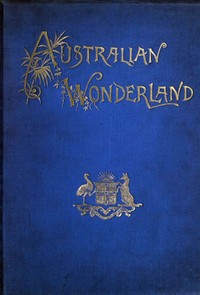
This digital edition of The Jenolan Caves: An Excursion in Australian Wonderland — Story, Setting & Ideas is described by source-level measurements including 44,730 words, 3 hr 15 min estimated reading time, and 7 detected text sections.
The text analysis averages about 23.5 words per sentence, while the detected sections provide another way to judge how the source is divided.
Project Gutenberg metadata also associates the work with “Australia -- Description and travel,” connecting these edition facts with the source record’s subject description.
Explore this collection
These alternatives are selected using recorded categories and estimated reading time.
About 199 minutes
Geography
45,607 recorded words. 4 minutes difference from this book's estimate.
View Gutenberg source #43284About 189 minutes
Geography
43,309 recorded words. 6 minutes difference from this book's estimate.
View Gutenberg source #53155About 205 minutes
Geography
47,058 recorded words. 10 minutes difference from this book's estimate.
View Gutenberg source #28562Search stored excerpts and compare books → Choose by your preferences →
Choices use stored catalog measurements. Estimates vary with reading speed. A shared category is a catalog label, not a claim that two books have the same argument or literary quality.
Search reads excerpt text stored with this catalog and links to its associated Gutenberg record. The connection is stored in the site database; this tool does not recheck that every excerpt is word-for-word identical to that external record. Excerpt search does not cover every chapter and does not verify historical publication dates.
Catalog snapshot checked: 2026-09-25. Coverage: 95 public books, 95 available source excerpts.
Read the complete public-domain text at its original source.
Read on Project GutenbergSamuel Cook’s The Jenolan Caves: An Excursion in Australian Wonderland (1889) began as a series of articles for the Sydney Morning Herald before being republished as a book. Cook repeatedly insists that “neither tongue, nor pen, nor pictorial art can convey an adequate idea” of the caves, yet his own prose works hard to do exactly that—cataloguing formations with a mix of technical terms and fanciful names. The text is structured as a guided tour, moving from the Grand Arch through named chambers such as the Lucinda Cave and the Coral Grotto, each described with attention to dimensions, lighting, and the precise dates of discovery.
Cook anchors his descriptions in specific dates and names. The Lucinda Cave, for instance, was “discovered on the 7th February, 1881” and named after the curator’s wife. Another grotto was “named on the 10th March 1881.” These details give the text a documentary quality, as if Cook is compiling a ledger of subterranean landmarks. The names themselves mix the personal (Lucinda, Katie’s Bower) with the whimsical (the Devil’s Coach House, the Cauliflower Rock). The latter is described as “the choufleur of the gnomes who guard the unfathomable caves of Jenolan,” a phrase that blends Cook’s geological eye with a nod to folklore. Readers should note that the naming conventions reflect late-Victorian sensibilities, where scientific exploration and romantic fancy coexisted.
Cook’s descriptions rely heavily on comparisons to precious stones and everyday objects. Stalactites are “covered with filaments about the thickness of ordinary sewing-cotton” or “thin as straws.” Cave walls “sparkle like a starlit sky,” and floors are “heaped with diamond drift.” The effect is to make the unfamiliar familiar, yet Cook also stresses the limits of such comparisons. He calls the beauty “Brobdignagian in its proportions,” a reference to Swift’s Gulliver’s Travels that underscores the scale. The text is full of measurements—halls “from 5 to 15 feet wide and from 6 to 25 feet high”—which ground the wonder in precise dimensions. This tension between the measurable and the marvellous is a recurring pattern.
Cook occasionally steps back from pure description to note the slow work of nature: “geological transformations and the slow processes of Nature in the production of works at once grand, ornate, and unique.” He also records human modifications, such as “a little iron ladder” that makes descent easier, or “arrangements being made” to guard a dangerous spot. These details remind the reader that the caves are not pristine—they are managed spaces. The presence of “red clay covered with smooth white formation” and “fractures of rock round about sparkle with crystals” suggests ongoing change. Cook’s account thus captures a moment when the caves were being opened to tourism, with paths, steps, and names imposed on a landscape that remains, in his words, “unfathomable.”
Cook’s book is best read as a period piece that reveals how 19th-century Australians made sense of a natural wonder. The tension between scientific cataloguing and romantic awe, between naming and acknowledging the limits of language, gives the text its character. Readers interested in the history of tourism, Victorian nature writing, or the early documentation of Australian landscapes will find this a valuable primary source—one that is as much about the act of describing as about the caves themselves.
Reading about the Jenolan Caves, I felt that quiet ache for language to fail when doing justice to beauty. It lingers the way remembering a good conversation does. That same feeling returned with Sport in the Crimea and Caucasus — Inside the Classic, where landscapes and moments are held close, yet honestly, without embellishment.
Use these questions to collect your thoughts before moving on.