About 195 minutes
The Jenolan Caves: An Excursion in Australian Wonderland — Story, Setting & Ideas
Geography
44,730 recorded words. 4 minutes difference from this book's estimate.
View Gutenberg source #39621
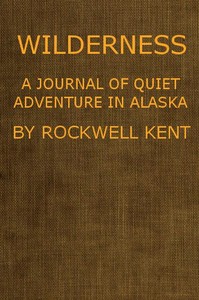
Wilderness, A Journal of Quiet Adventure in Alaska — Text and Context can be approached with a clearer sense of reading commitment from its source measurements: 45,607 words, 3 hr 19 min estimated reading time, and 14 detected text sections.
The text analysis averages about 16.7 words per sentence, while the detected sections provide another way to judge how the source is divided.
Project Gutenberg metadata also associates the work with “Kent, Rockwell, 1882-1971,” connecting these edition facts with the source record’s subject description.
Explore this collection
These alternatives are selected using recorded categories and estimated reading time.
About 195 minutes
Geography
44,730 recorded words. 4 minutes difference from this book's estimate.
View Gutenberg source #39621About 205 minutes
Geography
47,058 recorded words. 6 minutes difference from this book's estimate.
View Gutenberg source #28562About 189 minutes
Geography
43,309 recorded words. 10 minutes difference from this book's estimate.
View Gutenberg source #53155Search stored excerpts and compare books → Choose by your preferences →
Choices use stored catalog measurements. Estimates vary with reading speed. A shared category is a catalog label, not a claim that two books have the same argument or literary quality.
Search reads excerpt text stored with this catalog and links to its associated Gutenberg record. The connection is stored in the site database; this tool does not recheck that every excerpt is word-for-word identical to that external record. Excerpt search does not cover every chapter and does not verify historical publication dates.
Catalog snapshot checked: 2026-09-25. Coverage: 95 public books, 95 available source excerpts.
Read the complete public-domain text at its original source.
Read on Project GutenbergRockwell Kent's Wilderness is a diary of wintering on Fox Island, Alaska, from August 1918 onward. The catalog subjects list it under geography and biography, but the excerpts show a book less concerned with systematic description than with the texture of daily life: cutting wood, cooking, and recording the weather. Kent's voice is immediate and unadorned, as when he notes, “It blows worse than ever, and it is colder.” The journal also includes extended oral histories, such as Olson's account of the Nome gold rush, which occupy more space than any scenic survey.
The excerpts repeatedly foreground wind, cold, and sea conditions. Kent writes, “All day the blue sky has been hidden in clouds of vapor and flying spray. The bay seethes and smokes and huge breakers race across it.” Such passages are not mere backdrop; they structure the daily entries and dictate the pace of work. Olson's prophecy that “this was about the culmination of winter” is immediately undercut by Kent's skepticism: “I know Olson by now.” The weather becomes a narrative force, shaping both action and mood.
Kent's journal is filled with the specifics of manual labor: felling trees, sawing wood, stocking fuel. He writes, “I cut another tree this morning to release the one of yesterday and both fell with a magnificent crash.” The catalog subject “Artists -- Alaska -- Biography” might lead one to expect aesthetic reflections, but the excerpts emphasize physical exertion. The work is repetitive and necessary, and Kent records it without romanticism. The phrase “stocked our day's wood” recurs as a marker of accomplishment.
One of the longest continuous passages in the excerpts is Olson's story of the Nome gold rush, told in his own voice. It includes details of a tailor turned prospector, a woman named English Mary, and the chaos of claim-jumping. Kent transcribes it with minimal interruption, preserving Olson's vernacular: “They were taking out gold on the creek, those that had claims, at the rate of $5000 in a couple of hours.” This embedded oral history shifts the book's focus from the immediate landscape to a wider Alaskan past, complicating the catalog's emphasis on Renard Island.
Readers should approach Wilderness as a hybrid document: part personal diary, part oral history, part artist's sketchbook. The catalog subjects point to place and biography, but the text itself is most alive in its attention to routine, weather, and the voices of others. Kent's drawings, though not reproduced in the excerpts, are integral to the original edition. The journal rewards those who read for the concrete details of a winter spent in close quarters with a single companion.
Reading Rockwell Kent’s Alaskan journal, I kept thinking of his long hours hauling wood and listening to Olson’s tales—how work and stories braid together in isolation. It reminded me of another quiet record, Travels in the East Indian archipelago — Text and Context, where the same patient rhythm of daily observation and borrowed lore seems to hum underneath, equally unhurried.
Create a short personal record of your experience with this book.