About 72 minutes
A Briefe and True Report of the New Found Land of Virginia — A Reader’s Guide
Geography
16,408 recorded words. 9 minutes difference from this book's estimate.
View Gutenberg source #4247
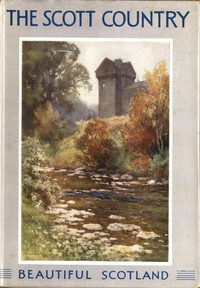
The Scott Country — Background and Themes can be approached with a clearer sense of reading commitment from its source measurements: 18,437 words, 1 hr 21 min estimated reading time, and 3 detected text sections.
The text analysis averages about 33.0 words per sentence, while the detected sections provide another way to judge how the source is divided.
Project Gutenberg metadata also associates the work with “Scottish Borders (Scotland) -- Description and travel,” connecting these edition facts with the source record’s subject description.
Explore this collection
These alternatives are selected using recorded categories and estimated reading time.
About 72 minutes
Geography
16,408 recorded words. 9 minutes difference from this book's estimate.
View Gutenberg source #4247About 91 minutes
Geography
20,896 recorded words. 10 minutes difference from this book's estimate.
View Gutenberg source #42579About 112 minutes
Geography
25,653 recorded words. 31 minutes difference from this book's estimate.
View Gutenberg source #5809Search stored excerpts and compare books → Choose by your preferences →
Choices use stored catalog measurements. Estimates vary with reading speed. A shared category is a catalog label, not a claim that two books have the same argument or literary quality.
Search reads excerpt text stored with this catalog and links to its associated Gutenberg record. The connection is stored in the site database; this tool does not recheck that every excerpt is word-for-word identical to that external record. Excerpt search does not cover every chapter and does not verify historical publication dates.
Catalog snapshot checked: 2026-09-25. Coverage: 95 public books, 95 available source excerpts.
Read the complete public-domain text at its original source.
Read on Project GutenbergJohn Geddie opens The Scott Country not with a landscape but with a question: “Where—and what—is the ‘Scott Country’?” He immediately complicates any simple answer by listing competing claims—Edinburgh, Fife, Perthshire, even London and Palestine—before narrowing his focus to the Borders. This rhetorical move establishes the book’s method: it treats geography as something made, not given, by the interplay of Walter Scott’s life, his writings, and the physical terrain. Geddie writes as a literary topographer, not a travel diarist, and his prose is dense with specific place-names, historical allusions, and the occasional local anecdote. The result is a guide that reads less like a tourist itinerary and more like an extended essay on how a writer can inhabit a region long after his death.
Geddie’s opening inventory of Scott-associated sites is deliberately exhaustive. He lists not only the expected locations—Abbotsford, Melrose, Dryburgh—but also “Goblin Ha’”, “Auchendinny’s hazel glade”, and the “Wolfs Crag” on Lothian’s eastern boundary. The effect is to map a literary territory that exceeds administrative borders. He treats each place as a node in a network of allusion, where Scott’s novels and poems have fixed certain landscapes in the cultural memory. The prose is precise: “the crumbling castles and the rugged shores once ruled by the ‘Lord of the Isles’” are invoked not as scenic backdrops but as evidence of a romance that has become inseparable from the land itself. Geddie’s diction—words like “storied”, “entrancing”, “immortally associated”—consistently frames geography as a product of narrative.
The description of Abbotsford is the book’s emotional and architectural center. Geddie traces the house’s growth from “a modest cottage” to a “stately baronial mansion” over fourteen years of “addition and reconstruction, mainly all of Sir Walter’s own devising.” He calls it a “poem in stone and lime,” a phrase that captures how Scott’s literary imagination materialized in turrets, corbels, and crowsteps. The account is notably unsentimental about the house’s later history: Geddie narrates Scott’s financial collapse and his return “a spent and broken man, to die” without melodrama. He balances this tragedy by emphasizing the house’s happier years—the literary visits, the “almost feudal receptions,” the daily walks with Lockhart and Skene. The passage is structured as a rise, fall, and partial recovery, mirroring the arc of Scott’s own life as Geddie understood it.
Geddie devotes careful attention to the objects Scott gathered at Abbotsford, treating them as extensions of his literary method. The door of the old Edinburgh Tolbooth—the “Heart of Midlothian”—arrived with its “ponderous lock and key over which ‘Daddie Ratton’ had held charge.” Sculptured stones from High Street houses, portraits of Napoleon and Prince Charlie, the keys of Loch Leven Castle: each item is a material link to a story. Geddie’s phrasing—“a routh o’ auld nicknackets,” borrowed from Burns and Scott’s own Oldbuck—signals his awareness that collecting was itself a form of authorship. The list of relics is not random; it traces a network of loyalties and conflicts—Jacobite, Covenanting, Napoleonic—that Scott wove into his fiction. Geddie presents the house as a museum of the national imagination, where “the escutcheons of ‘ye Clannis and men of name quha keepit ye Scottish Marches’” hang alongside the tools of everyday Border life.
Geddie’s prose is most distinctive when he lets local idiom surface. He recounts the story of “Soor Plooms,” the bagpipe air associated with Galashiels, and notes that it was “the favourite bagpipe air of Scott’s Kelso uncle.” He quotes a line from a poem—“A trouble, not of clouds or weeping rain”—to mark Scott’s departure from Abbotsford. These small verbal textures give the book a regional authenticity that a more generic guide would lack. Geddie also pays attention to the soundscape: “Tweed sings a blither as well as a fuller strain since he dwelt by it.” The river’s song is a metaphor for how Scott’s presence has altered the very atmosphere of the Borders. Geddie does not claim that Scott invented the region’s character; rather, he argues that the writer’s life and work have become part of the landscape’s own voice, audible to anyone who walks its hills and riverbanks.
Geddie’s The Scott Country is best read as a companion to Scott’s own works, not as a substitute for them. The book assumes familiarity with the novels and poems, and its value lies in the density of its local knowledge—the precise location of a tower, the origin of a place-name, the anecdote that links a ruin to a line of verse. Readers new to Scott may find the allusions thick; those who know the Waverley Novels will recognize how Geddie uses geography to illuminate the writer’s methods. The illustrations by E. W. Haslehust, though not analyzed here, reinforce the book’s central argument: that the Borders are a landscape made legible by art.
Reading about Scott’s Borders made me think of my grandfather’s old maps, margins penciled with names I’ll never verify. He loved that kind of place-making, where a landscape becomes story. I felt something akin to that wandering through Following the Equator: A Journey Around the World. Part 2 — Edition Insights, where every mile carries the weight of observation, not just travel. Both books feel like company for a long, quiet afternoon.
Create a short personal record of your experience with this book.