About 301 minutes
Nights: Rome, Venice, in the Aesthetic Eighties; London, Paris, in the Fighting Nineties — Text and Context
Geography
69,032 recorded words. 1 minutes difference from this book's estimate.
View Gutenberg source #24452
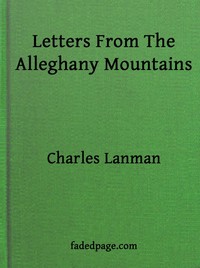
Letters from the Alleghany Mountains — Key Ideas to Explore can be approached with a clearer sense of reading commitment from its source measurements: 68,886 words, 5 hr estimated reading time, and 9 detected text sections.
The text analysis averages about 26.6 words per sentence, while the detected sections provide another way to judge how the source is divided.
Project Gutenberg metadata also associates the work with “Virginia -- Description and travel,” connecting these edition facts with the source record’s subject description.
Explore this collection
These alternatives are selected using recorded categories and estimated reading time.
About 301 minutes
Geography
69,032 recorded words. 1 minutes difference from this book's estimate.
View Gutenberg source #24452About 304 minutes
Geography
69,728 recorded words. 4 minutes difference from this book's estimate.
View Gutenberg source #29306About 313 minutes
Geography
71,826 recorded words. 13 minutes difference from this book's estimate.
View Gutenberg source #48358Search stored excerpts and compare books → Choose by your preferences →
Choices use stored catalog measurements. Estimates vary with reading speed. A shared category is a catalog label, not a claim that two books have the same argument or literary quality.
Search reads excerpt text stored with this catalog and links to its associated Gutenberg record. The connection is stored in the site database; this tool does not recheck that every excerpt is word-for-word identical to that external record. Excerpt search does not cover every chapter and does not verify historical publication dates.
Catalog snapshot checked: 2026-09-25. Coverage: 95 public books, 95 available source excerpts.
Read the complete public-domain text at its original source.
Read on Project GutenbergCharles Lanman opens his 1849 Letters from the Alleghany Mountains with a precise etymology: the Cherokee word Dah-lon-e-ga means “place of yellow metal,” and the hamlet of Dahlonega, Georgia, sits at the foot of the mountains in what was then reputedly the wealthiest gold region in the United States. Lanman immediately establishes a layered narrative—one that moves between natural description, Native place-names, and the recent history of Cherokee removal, which he dryly calls “polite banishment by the General Government.” The book’s twenty-one letters, originally published in the National Intelligencer, trace a journey through Georgia, North Carolina, Tennessee, and Virginia, mixing geological notes, hunting scenes, and encounters with settlers and Cherokee individuals. Lanman’s voice is observant and occasionally wry, as when he reports a political argument in which a congressman is praised as not merely “some pumpkins” but “PUMPKINS.”
The first letter anchors the reader in Dahlonega, where Lanman reports that “unquestionable evidences” of sixteenth-century Spanish exploration—including the remains of an old furnace—had been uncovered by recent mining. He notes that gold digging became a regular business only after the Cherokees were removed, a fact he presents without elaboration but with evident irony. The tension between natural wealth and human displacement runs through these early pages. Lanman later devotes an addenda to the geology, soil, and minerals of the Alleghany Mountains, treating the region as a scientific specimen as well as a travel destination. His descriptions of the Painted Rocks on the French Broad River—limestone cliffs rising two to four hundred feet, “in form as irregular and fantastic as can well be imagined”—evoke a ruined city, yet he remarks that “historical and legendary associations” are singularly barren there. The landscape, he suggests, was never regularly inhabited by Indians but served as hunting ground, a claim that subtly reinforces the idea of a region emptied of prior claims.
One of the most vivid set pieces in the letters is a deer hunt on the French Broad River. Lanman describes a buck with horns “only about a foot long” plunging into the rapids, pursued by a pack of hounds. The animal swims, leaps, and goes over a rocky fall, emerging unharmed, then turns at bay in a shallow place. The scene is rendered in breathless prose: “His movements during this scene were indeed superb, and I could not but pity the noble fellow’s condition.” The hunt ends when the landlord’s son shoots the deer through the heart, and a mounted negro wades his horse into the river to tow the carcass ashore. Lanman’s sympathy for the deer is palpable, yet he does not moralize; the episode stands as a raw, unsentimental portrait of frontier life. The passage also reveals the social structure of the hunt—the landlord’s son as marksman, the enslaved man as laborer—without commentary, leaving the reader to weigh the competing claims of sport, subsistence, and cruelty.
Several letters focus on the Cherokees of Carolina, their customs, and notable individuals. Lanman devotes a letter to “Cherokee Characters,” though the excerpts provided do not reveal which figures he profiles. He also discusses Cherokee place-names, such as Dahlonega, and the meaning of local words. The book’s dedication to Joseph Gales, editor of the National Intelligencer, underscores the political context: Lanman’s letters originally appeared in a Washington newspaper read by the very policymakers who had overseen Cherokee removal. His tone when describing the Cherokees is ethnographic and often sympathetic, but he writes as an outsider. The tension between his admiration for Cherokee resilience and his acceptance of their displacement as a fait accompli is never resolved. In the addenda, he treats the mountains as a scientific subject, further distancing the human history from the natural one. Readers should attend to how Lanman’s language of “polite banishment” and “rightful possessor (according to law)” frames a narrative of conquest as inevitable progress.
Lanman’s Letters reward a patient reader who can hold multiple registers in mind: the naturalist’s eye for rock and river, the traveler’s ear for dialect and anecdote, and the ethnographer’s attempt to record a culture on the brink of erasure. The book is neither a straightforward travelogue nor a systematic study, but a hybrid that reflects the unsettled state of the region itself. Pay attention to what Lanman leaves unsaid—the silences around slavery, the offhand references to removal, the gaps between his scientific addenda and his personal narratives—for they reveal as much as his descriptions of waterfalls and hunting dogs.
Those letters from the Alleghany Mountains left me with a feeling of being a guest in someone else’s memory—gold dust and old Cherokee trails mingling with the author’s own quiet days. I found the same gentle intimacy in The Cruise of the "Janet Nichol" Among the South Sea Islands: A Diary — Reading Notes, where each island felt less like a destination and more like a passing thought, half-remembered.
Use these questions to collect your thoughts before moving on.