About 363 minutes
Ski-runs in the High Alps — Context and Discussion
Geography
83,417 recorded words. 2 minutes difference from this book's estimate.
View Gutenberg source #54163
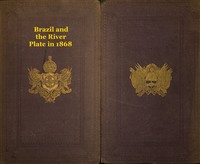
Before opening Brazil and the River Plate in 1868 — Context and Discussion, the edition data offers a quick orientation: 83,019 words, 6 hr 1 min estimated reading time, and 37 detected text sections.
The text analysis averages about 29.7 words per sentence, while the detected sections provide another way to judge how the source is divided.
Project Gutenberg metadata also associates the work with “Argentina -- Description and travel,” connecting these edition facts with the source record’s subject description.
Explore this collection
These alternatives are selected using recorded categories and estimated reading time.
About 363 minutes
Geography
83,417 recorded words. 2 minutes difference from this book's estimate.
View Gutenberg source #54163About 353 minutes
Geography
80,962 recorded words. 8 minutes difference from this book's estimate.
View Gutenberg source #35156About 348 minutes
Geography
80,023 recorded words. 13 minutes difference from this book's estimate.
View Gutenberg source #38891Search stored excerpts and compare books → Choose by your preferences →
Choices use stored catalog measurements. Estimates vary with reading speed. A shared category is a catalog label, not a claim that two books have the same argument or literary quality.
Search reads excerpt text stored with this catalog and links to its associated Gutenberg record. The connection is stored in the site database; this tool does not recheck that every excerpt is word-for-word identical to that external record. Excerpt search does not cover every chapter and does not verify historical publication dates.
Catalog snapshot checked: 2026-09-25. Coverage: 95 public books, 95 available source excerpts.
Read the complete public-domain text at its original source.
Read on Project GutenbergWilliam Hadfield opens his 1868 narrative with a clear disclaimer: his work 'makes no pretentions to literary merit.' Instead, he offers a fact-driven account of Brazil and the River Plate, measuring their progress since his 1853 visit. The book's structure—mixing travelogue with railway statistics, port descriptions, and financial tables—reflects its dual audience of investors and general readers. Hadfield's voice is that of a practical observer, more interested in wool sheds and bridge spans than in picturesque landscapes.
Hadfield devotes substantial space to railway construction, treating each line as a case study in economic development. He quotes a private letter describing the Buenos Ayres Great Southern Railway in detail: the 'single-roofed shed into which the wool is discharged' and the 'handsome bridge over the Riachuelo.' The letter notes that stations are named after local landowners like Mr. Glew and Mr. Donsellear, grounding the infrastructure in personal enterprise. Hadfield also reports financial performance—net profits rising from three to nearly seven percent—and discusses extensions to intercept bullock-cart traffic. These passages reveal his method: combining official data with eyewitness testimony to assess whether English capital is well invested.
The text repeatedly juxtaposes modern amenities with persistent squalor. In Buenos Ayres, the railway station at Barracas is 'connected with the Boca' but plagued by 'abominable stench arising from dead carcasses and offal.' Hadfield notes that piggeries continue 'spite of all municipal regulations.' Yet once the train leaves the city, it reaches 'great plains covered with sheep, cattle, and horses' where pastures look 'green and healthy.' This contrast between urban dysfunction and rural productivity is a recurring pattern. Hadfield does not moralize; he simply records what he sees, letting the dissonance speak for itself.
Hadfield builds his argument through layered evidence. He includes official documents in an appendix, reproduces a private letter verbatim, and peppers his narrative with precise figures—'£150,000' corrected to '£15,000' in the errata. His preface frames the book as a sequel to his 1854 work, inviting readers to measure change over fifteen years. Yet he rarely claims to have witnessed events firsthand; instead, he compiles reports from railway managers, government guarantees, and commercial statistics. This approach gives the book an almost bureaucratic tone, but it also makes his conclusions about 'progress' feel grounded in verifiable detail rather than impression.
Hadfield's book rewards readers who approach it as a primary source on 1860s infrastructure and investment. Its value lies less in narrative flair than in the density of specific observations—from the layout of a wool shed to the stench of a slaughterhouse district. Those interested in economic history or the material culture of Victorian travel will find a meticulous record of how one Englishman measured change in South America.
I found myself thinking about Hadfield's careful, unhurried way of watching cities change, the way he measured progress not in grand gestures but in railway ties and quiet infrastructure. Something similar lingers in Nights: Rome, Venice, in the Aesthetic Eighties; London, Paris, in the Fighting Nineties — Text and Context, where the shift between decades feels just as tangible, just as personal. Both felt less like history and more like a friend's letter home.
Create a short personal record of your experience with this book.